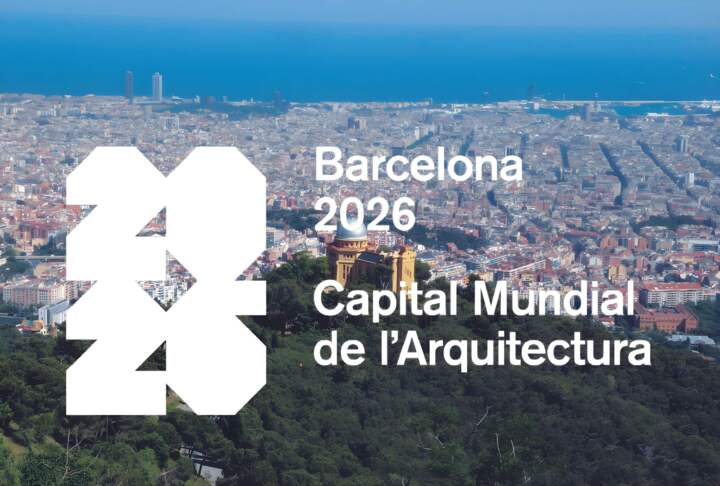
Barcelona 2026: Global Epicenter of Architecture
Barcelona is preparing to experience one of the most transcendental years in its contemporary history. In 2026, Barcelona will not only celebrate its rich heritage legacy, but will also project itself into the future as the UIA-UNESCO World Capital of Architecture. This designation, obtained after a competitive vote against the city of Beijing, is not only an honorary title; It is the recognition of an urban trajectory that has been able to balance the audacity of modernism with the functionality of modern planning and the challenges of climate sustainability.
Under the lens of experts such as the engineer Sara Oró, this milestone is perceived as a unique opportunity to place the person at the centre of urban design. The event will not be limited to academic conferences, but will permeate every corner of the city through an ambitious program that seeks to democratize architectural knowledge and transform the social fabric of neighborhoods.
The triumph of a model: From Beijing to Barcelona
The choice of Barcelona as the venue for the Congress of the International Union of Architects (UIA) and World Capital of Architecture was the result of solid institutional support that united the Barcelona City Council, the Generalitat de Catalunya and the Government of Spain. The victory over the Chinese bid underlined the validity of the "Barcelona model": a vision of urbanism that prioritises human scale, the rehabilitation of heritage and the creation of vibrant public spaces in the face of the expansive and impersonal growth of Asian megacities.
The pillars of Barcelona 2026: Urban planning with purpose
The 2026 event is based on a clear premise: architecture must be a tool for social change. It is not just about constructing aesthetically appealing buildings, but about designing solutions for the most pressing challenges of the 21st century. The thematic axes defined for this year include:
- Housing and urban renewal: In a city with a very high population density, the debate will focus on how to guarantee the right to housing through the rehabilitation of old buildings and the creation of new models of coexistence.
- Mobility and "Superblocks": The international success of Barcelona's superblocks will be studied. It will analyse how the recovery of streets for pedestrians and the reduction of road traffic improves public health and neighbourhood cohesion.
- Sustainability and climate strategies: In the face of the climate emergency, the architecture of 2026 will advocate for energy efficiency, the use of low-impact materials and the design of "buildings that breathe", integrating smart technological solutions such as those proposed by GEZE.
- Heritage preservation: Barcelona's ability to reinvent its historic buildings, adapting them to contemporary uses without losing their essence, will be highlighted.
"Open Barri": The democratization of architecture
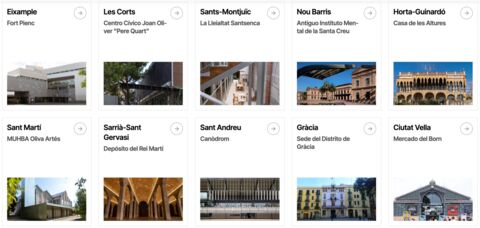
Under the Open Barri concept, the conference aims to decentralise activities and bring them closer to the public.
One of the most innovative strategies presented in the article is the concept "10 months, 10 districts, 10 venues". Under the slogan of Open Barri, the event seeks to break with the traditional centralization of major international summits. From February to December 2026, the spotlight will rotate monthly through each of the city's districts: from Ciutat Vella to Nou Barris, passing through Gràcia and Sants-Montjuïc. Each district will use an emblematic building as a headquarters and meeting point, becoming a living laboratory where citizens can actively participate.
To encourage this participation, an urban "gymkhana" has been designed. Citizens and visitors will be able to tour these venues, collecting stamps from each district. This playful approach not only seeks to attract tourists, but also to reconnect the people of Barcelona with their immediate surroundings, encouraging pride of belonging and the discovery of local architectural gems that often go unnoticed.
Gaudí's Centenary: The Culmination of a Dream
The year 2026 coincides with an event of global significance: the centenary of the death of Antoni Gaudí. The genius of modernism, whose shadow casts Barcelona's identity to the rest of the planet, will be a central figure in the celebrations. This anniversary will be accompanied by fundamental construction milestones in the Sagrada Família. The completion of the Tower of Jesus Christ is expected, which with its 172.5 meters high will make the temple the tallest building in Barcelona. This completion will not only close an essential part of the urban skyline, but will symbolize the union between the artisanal tradition of the nineteenth century and the structural calculation and materials technologies of the twenty-first century.
The future Hospital Clínic: Urban surgery on the Diagonal
Beyond the historic celebration, 2026 will be the year of great projects for the future. The most outstanding is, without a doubt, the international architectural competition for the new Hospital Clínic-UB Health Campus. With an estimated investment of 1,700 million euros, this project will radically transform the Diagonal area, near the UB sports fields. It is not simply a hospital; It is a 300,000 m² infrastructure that will integrate cutting-edge health, biomedical research and university education. This health hub aims to be a world benchmark in hospital architecture, prioritising humanised spaces, natural light and perfect integration with public transport and the surrounding urban fabric.
UIA World Congress: "One day, One tomorrow"
The climax of the year will take place from June 28 to July 2 with the celebration of the World Congress of the International Union of Architects (UIA). Under the slogan "One day, One tomorrow", thousands of professionals from all over the world will meet in Barcelona to discuss the future of the profession.
This conference will move away from theoretical discourses to focus on practical cases and real solutions. It will discuss how architecture can mitigate social inequalities, how smart buildings can manage resources autonomously, and what is the role of the architect in a world dominated by digitalization.
Technology at the service of people
The vision of professionals such as Sara Oró underlines that modern architecture cannot be understood without engineering and technology. In this context, companies such as GEZE play a key role. The transition to safer, more accessible and efficient buildings requires smart solutions in access and security systems.
"Architecture that cares" is one that uses technology not as an end, but as a means to improve habitability. By 2026, Barcelona will demonstrate that building automation and smart infrastructure management are essential to create resilient environments where the health and well-being of users are the absolute priority.
Conclusion: A Legacy That Will Endure
Barcelona 2026 should not be seen as an ephemeral event, but as the catalyst for a new urban era. At the end of the year, success will not be measured only by the number of visitors or the impact in international media, but by the lasting impact on their neighborhoods. UNESCO's designation is an invitation to reflect on what kind of cities we want to inhabit. By placing the person at the centre, promoting sustainability and opening the doors of architecture to citizens through the Open Barri, Barcelona reaffirms its commitment to a fairer and more inclusive future. In 2026, the city will not only be the capital of architecture; it will be the mirror in which all cities that aspire to be, above all, human, look at themselves.