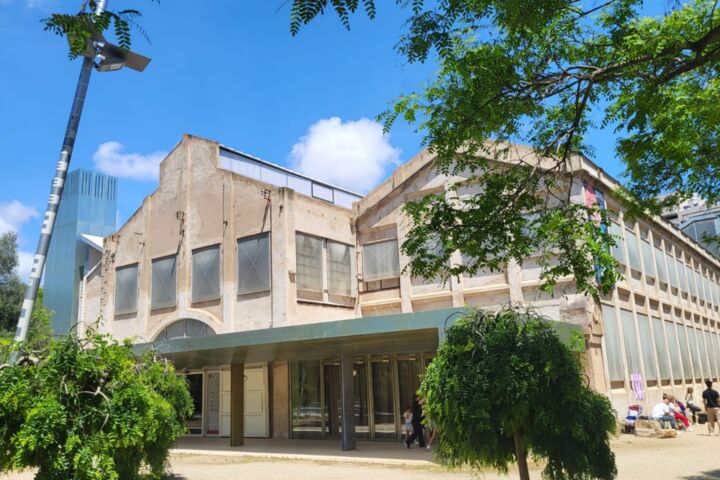
MUHBA Oliva Artés: Industrial heritage and home of the World Capital of Architecture 2026
This former metallurgical factory, built in 1920 and dedicated to the production and repair of machinery, is now the laboratory space of the Barcelona History Museum in Poblenou, as well as the headquarters of the Sant Martí district within the framework of Barcelona World Capital of Architecture 2026.
History, heritage and transformation in the district of Sant Martí
File photo of the former metallurgical building, built in 1920.
It is a participatory space on the history and heritage of the contemporary city, a shared workspace between historians, social scientists, architects, technological research centres, universities, schools, archives, cultural entities, associations and citizens interested in the city, such as the Taula de l'Eix Pere IV, the Historical Archive of Poble Nou and the Association of Residents of Poblenou.
The district of Sant Martí, made up of ten neighbourhoods, concentrates the industrial past and the technological future of the city. Old factories, working-class neighbourhoods and industrial estates were opened up to the sea to become the city's coastal district thanks to the 1992 Olympic Games. The Oliva Artés building is located next to the Parc del Centre del Poblenou, and was part of the 22@ project: old industrial buildings coexist with avant-garde contemporary architecture. Precisely, the warehouse was going to be demolished in 2008 in the context of the construction of the Parc Central del Poblenou, signed by the renowned architect Jean Nouvel. At the last minute, a neighborhood association convinced the City Council of the need to preserve the building, in a state of structural ruin, and so, a few days before the entry of the excavators they managed to save it. The refurbishment and conversion was awarded to the BAAS Arquitectura studio, led mainly by the architect Jordi Badia Rodríguez, with the premise of preserving the particular character of the nave and the richness of the interior space. In an economic context of austerity, due to the crisis in the sector, simplicity was chosen and the minimum of elements were incorporated into the whole.
Spatial connection: Geometry, materials and the play of light in the basilica nave
The construction has a basilica structure, with a raised central nave and two side naves of lower height. A porch was added at the main entrance, made of galvanized steel sheets, finished between gold and silver, depending on the incidence of sunlight, with sliding glass doors, which gives access to a grandiose and impressive open space, with an austere aesthetic, typical of the factories of the time. The roof was replaced and the floor was paved with concrete. The refurbishment preserved the original textures: interior walls of exposed brickwork, structure of metal trusses in the three naves, metal pillars, the admired Catalan volta and the industrial character of the building in general; there are even remains of the metal pieces of the workshop, anchored in walls and pillars.
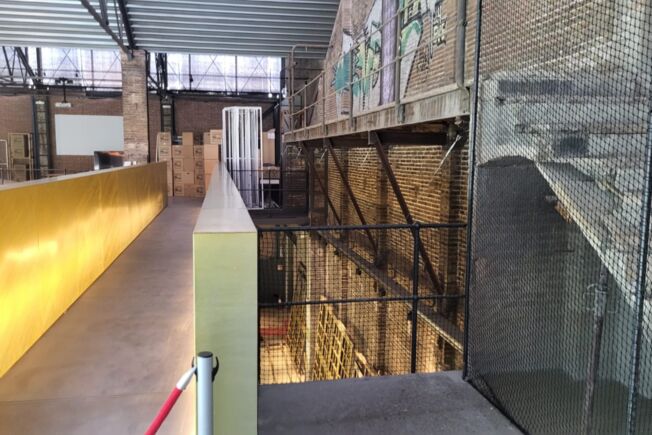
View of the catwalks.
Interior walls of exposed brick, structure of metal trusses in the three naves, metal pillars, the admired Catalan volta and the industrial character of the building in general.
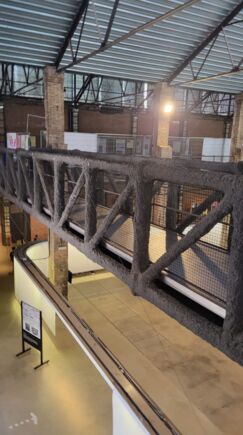
Detail of the metal trusses.
The renovation preserved the original textures, such as the metal truss structure.
View of the front entrance porch.
Made of galvanized steel sheets with sliding glass doors that gives access to a grandiose and impressive open space, typical of the factories of the time.
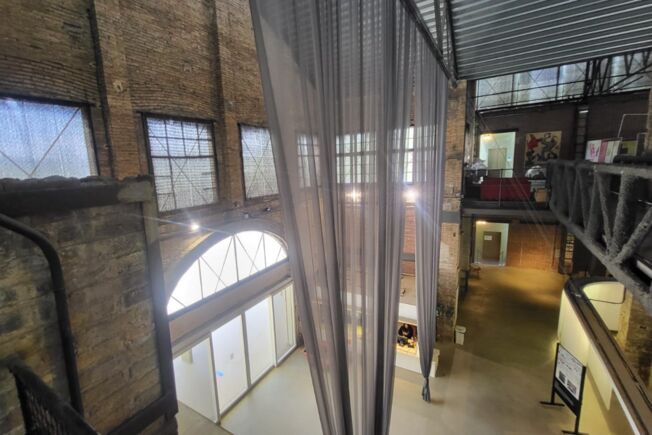
Entering on the right hand side stands a spectacular and majestic spiral staircase made of galvanized, gilded steel and in the shape of a helix, which gives access to the mezzanine of the right side nave, where you can currently visit the temporary exhibition CCP15Y, 15 years of comparative architecture. The two side naves are connected by two fantastic walkways: the previous one, metallic and with a gunite finish, recalls the old railway structures; On the other hand, the elegant walkway at the back, modern, matching in terms of finish and tonality with the main entrance and the spiral staircase, provides a contrast and a singular shine. The view of the open space of the central nave from both walkways and from the balcony of the mezzanine is wonderful. Natural light penetrates along the upper part of the two side naves, windows with raffia awnings on the inside: textile veils, translucent and light.
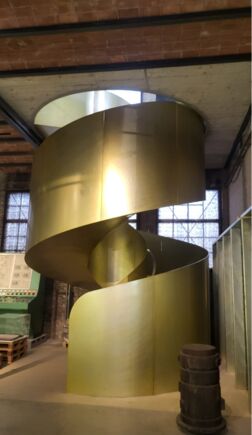
View of the spiral staircase.
Entering on the right hand side stands a spectacular and majestic spiral staircase made of galvanized, gilded steel and in the shape of a helix, which gives access to the mezzanine of the right side nave.
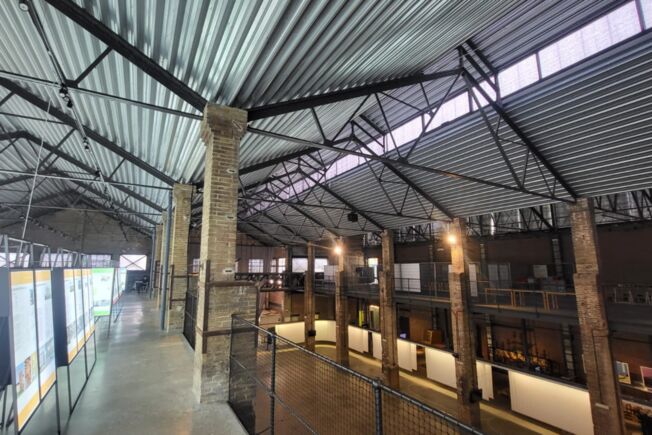
Views from the top of the enclosure.
The view of the open-plan space of the central nave from both walkways and from the balcony of the mezzanine is wonderful.
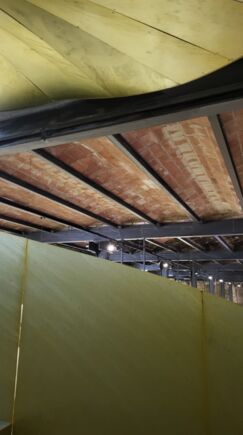
Detail of the MUHA ceiling.
View of the "volta catalana" (or Catalan vault), a traditional construction system whose use became popular from the seventeenth century onwards.
All this constitutes a piece halfway between a building and a pavilion, still without air conditioning and under constant renovation. The MUHA Oliva Artés is a space to learn, think and reinvent with a historical perspective the technological, economic, social, political and cultural codes of modern Barcelona, a classroom to read the city.
In fact, and in this spirit, the Oliva Artés space is currently open to visitors to the permanent exhibition Interrogar Barcelona. From Industrialisation to the 21st Century, a beautiful exhibition that examines Barcelona's trajectory from the 18th century to the present day and approaches it from different angles such as work, demography, immigration, social conflicts, territory or industrial development. Certainly, a highly recommended visit that will not leave you indifferent.
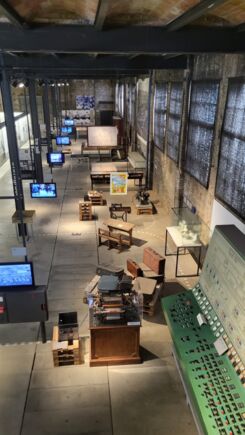
Exhibition "Interrogating Barcelona. From industrialization to the XXI century".
Permanent exhibition that examines Barcelona's trajectory from the eighteenth century to the present day, approaching it from different angles: work, demography, immigration, social conflicts, territory or industrial development.
Details of the permanent exhibition.
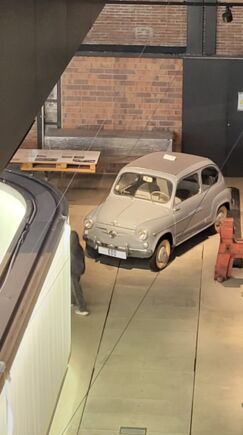
The legendary SEAT 600.
Sant Martí World Capital of Architecture 2026 Venue
Museu d'Història de Barcelona Oliva Artés
Address: Calle Espronceda, 142-146
Opening hours: October to May, Wednesday from 10 am to 2 pm and from 3 pm to 6 pm. Sundays and holidays, from 11 am to 3 pm and from 4 pm to 6 pm. June, July, August and September, Saturdays and Sundays from 11 am to 3 pm and from 4 pm to 8 pm
Future projection: Integrating GEZE innovation into a constantly renewing space
As a unique piece of architecture that operates halfway between a building and a pavilion, and which is currently not yet air-conditioned, the incorporation of GEZE solutions is the ideal opportunity to solve the challenges of thermal comfort and usability that an urban laboratory demands in 2026. Although the building does not have these technologies today, GEZE engineering could greatly enhance its functionality through the following specific applications:
Smooth and respectful universal accessibility
In response to the constant flow of citizens, scientists and students who flock to this participatory space, the inclusion of GEZE automatic sliding glass door systems in the main galvanised steel entrance would ensure a completely inclusive entrance free of physical barriers. This "invisible" technology would integrate perfectly with the austere and industrial aesthetics of the factory without breaking the original design of BAAS Arquitectura.
LEARN MORE
Safety and intelligent evacuation in open-plan halls
Hosting large-traffic permanent and temporary exhibitions, visitor safety is a priority. The implementation of GEZE access control and escape route management systems would ensure foolproof protection against emergencies, safeguarding both the integrity of citizens and the preservation of the building's valuable listed industrial heritage.
LEARN MORE
Automated natural ventilation for non-air conditioning spaces:
Hosting large-traffic permanent and temporary exhibitions, visitor safety is a priority. The implementation of GEZE access control and escape route management systems would ensure foolproof protection against emergencies, safeguarding both the integrity of citizens and the preservation of the building's valuable listed industrial heritage.
LEARN MORE

